A child wakes with a fever at 10 pm. A repeat prescription has run out before a work trip. A sore throat needs advice, but the nearest clinic is an hour away. In these moments, the choice between telehealth versus home doctor care can make a real difference to how quickly you get help.
Both options can bring medical care closer to home. The right one depends on your symptoms, whether you need a physical examination, how urgently you need care and what services are available where you live. For many routine GP needs, an online consultation can be quick and easy. For concerns that need hands-on assessment, a doctor visiting your home may be the better fit.
Telehealth versus home doctor: the key difference
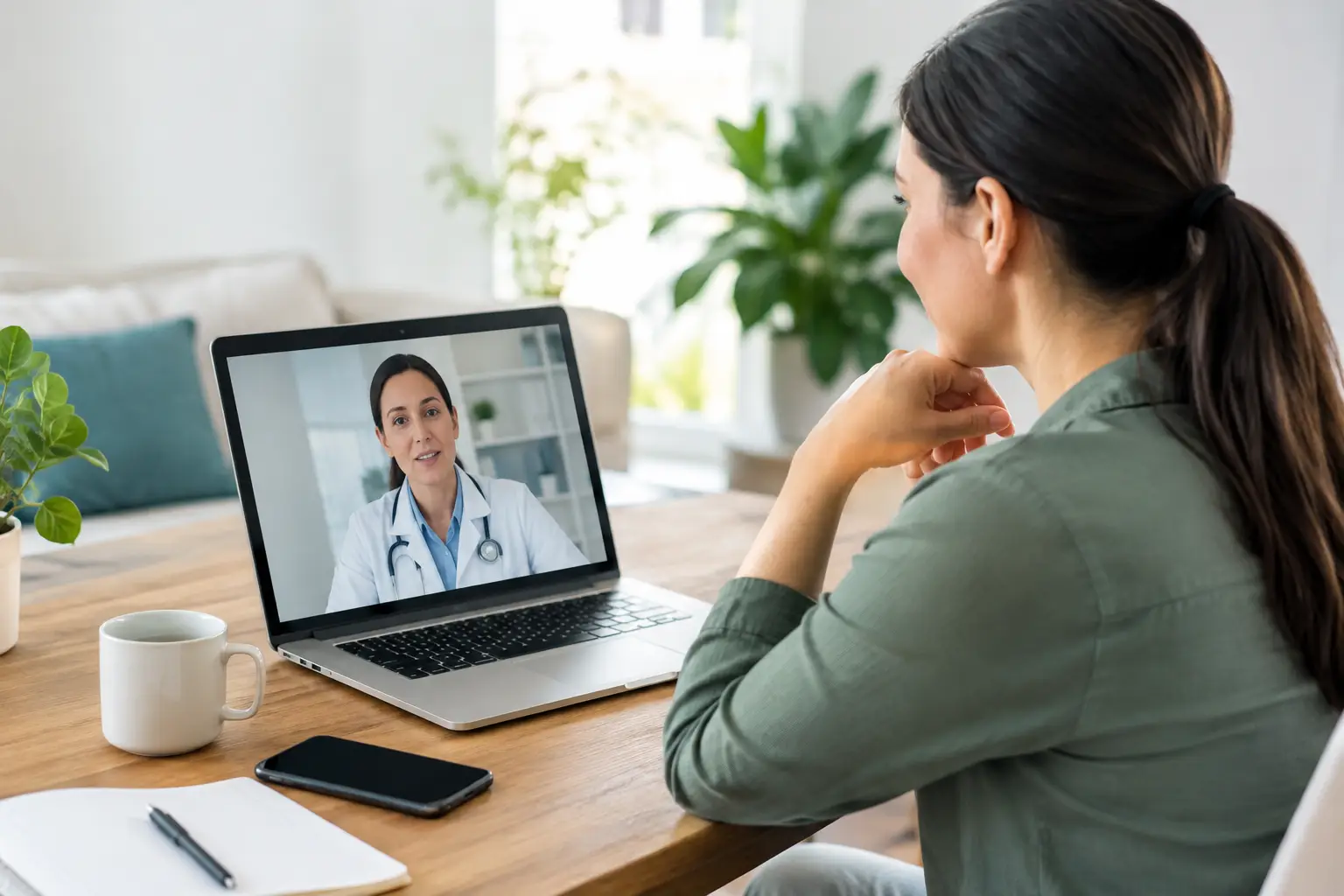
Telehealth lets you speak with a doctor remotely, usually by video or phone. You can have a consultation from home, work, university or while travelling in Australia. If clinically appropriate, the doctor may provide medical advice, a prescription or repeat script, a medical certificate, pathology request or specialist referral.
A home doctor, sometimes called a home-visiting GP or after-hours doctor, travels to your address for an in-person consultation. They can observe you directly, examine some symptoms and assess whether you need further treatment. This can be particularly useful when getting to a clinic is difficult or the patient is too unwell to travel safely.
Neither option replaces emergency care. For chest pain, severe breathing difficulty, signs of stroke, heavy bleeding, severe allergic reactions, loss of consciousness or a medical emergency, call 000 or attend the nearest emergency department.
When telehealth may be the practical choice
Telehealth works best when a doctor can make a safe clinical assessment by talking through your symptoms, reviewing your history and, where useful, seeing you on video. It removes travel time, waiting rooms and the challenge of fitting an appointment into a packed day.
It is often suitable for straightforward and non-emergency concerns such as colds and flu, allergies, migraines, uncomplicated urinary symptoms, contraception questions, sexual health advice, minor skin concerns, hair loss and weight management. It can also be useful for discussing ongoing conditions such as high blood pressure or diabetes, particularly when you have recent readings or test results to share.
For busy parents, telehealth can mean speaking with a doctor while a child rests at home rather than taking siblings to a waiting room. For regional patients or people with limited mobility, it can reduce a significant barrier to routine care. For workers and students, it may mean arranging a consultation around their schedule instead of losing hours to travel and a clinic visit.
Telehealth is also well suited to administrative and follow-up needs. A doctor may be able to assess a request for a medical certificate, repeat prescription, referral or pathology test without a face-to-face visit. These documents are still issued only when clinically appropriate. A consultation is not simply a form to complete - the doctor needs enough information to make a safe decision.
With Click For Health, patients can book an online consultation with an Australian-registered doctor, with appointments available 24/7. The process is designed to be no fuss: book, speak with a doctor securely and receive appropriate clinical documentation or treatment advice after your consultation.
What to prepare for an online consultation
A little preparation helps your telehealth appointment run smoothly. Find a quiet, private place with reliable mobile reception or internet access. Have your Medicare details, current medications, allergies and relevant health history ready.
If you are discussing a specific symptom, note when it started, what makes it better or worse and whether it is changing. For chronic condition reviews, it can help to have recent blood pressure, blood glucose, temperature or weight readings available. Clear information helps the doctor decide whether remote care is appropriate or whether you need an in-person examination.
When a home doctor may be a better option
A home visit can be valuable when a physical assessment is likely to change the doctor’s decision. A doctor may need to listen to the chest, examine the ears or throat, check a wound, assess a rash closely, feel the abdomen or observe how a person is moving and responding.
This is often helpful for young children, frail older adults, people with disability or anyone who is too unwell to make the trip to a clinic. It can also provide reassurance when a person’s condition seems more complex than it first appeared over the phone.
A home doctor may be more appropriate for symptoms such as persistent high fever, worsening cough, significant ear pain, vomiting or diarrhoea with dehydration concerns, an infected-looking wound, a painful injury or a new rash accompanied by illness. The doctor can assess the person in the room and decide whether home treatment, a clinic follow-up or hospital care is needed.
That said, availability can vary by suburb, time of day and provider. Home visits may involve a longer wait than telehealth because the doctor must travel between patients. In some regional and remote areas, they may not be available at all. If your symptoms are getting worse while you wait, seek urgent medical advice.
What each option cannot do
The limits of telehealth are fairly clear: a doctor cannot physically examine you, perform a procedure, take a blood sample, test your urine on the spot, give an injection or listen to your lungs through a screen. Video can be helpful for visible symptoms, but lighting, camera quality and angles are not a substitute for an examination when one is needed.
A home doctor can do more in person, but they also have limits. They may not have the diagnostic equipment, imaging or treatment options available at a medical centre or hospital. If tests such as X-rays, scans or urgent pathology are required, you may still need to attend another service.
In either setting, a responsible doctor may recommend an in-person clinic appointment, urgent care or an emergency department instead of issuing a prescription or treating the problem remotely. That is not a setback. It is safe clinical care based on the information available.
Cost, privacy and convenience
Cost can differ between telehealth and home doctor services. Some services may offer bulk-billed appointments for eligible patients, while others charge a private fee. Check the price before booking and ask whether there may be an out-of-pocket cost. Transparent pricing makes it easier to choose the right option without surprises.
Privacy matters too. Telehealth should take place through a secure system, and it is best to choose a private location for your call. Avoid discussing sensitive health details in a shared office, café or public space. Reputable Australian telehealth providers use qualified, AHPRA-registered practitioners and confidential systems to protect your health information.
Convenience is not only about speed. It is about getting the level of care your situation needs. Telehealth may be the fastest route for a repeat script or routine advice. A home doctor may be worth the wait when seeing and examining the patient is likely to matter.
How to decide what to book
Start with one practical question: does this problem need a doctor to examine me in person? If the answer is probably no, telehealth can be an efficient first step for many common GP concerns. You can discuss your symptoms, receive advice and organise appropriate prescriptions, certificates, referrals or test requests without leaving home.
If symptoms are severe, new and concerning, rapidly worsening or difficult to explain, an in-person assessment is usually the safer choice. Consider a home doctor where available if travel is difficult, or attend a clinic if you can do so safely. When there is any doubt about an emergency, call 000.
The best option is the one that gives you timely, appropriate care without adding unnecessary stress. When routine health needs arise, booking a secure telehealth consultation can be a simple place to start - all from wherever you are.