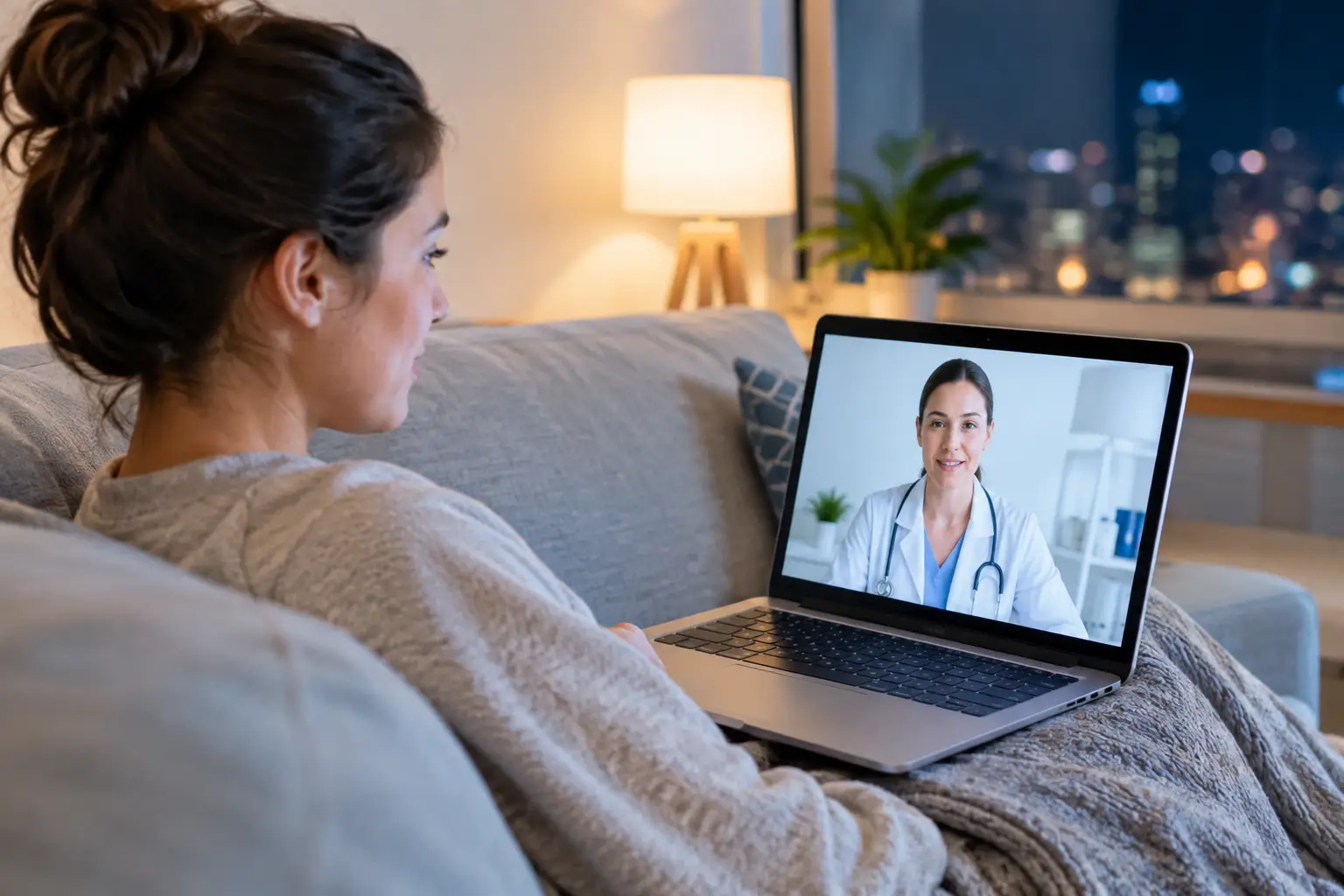
It is 9.30 pm, your child has developed a rash, your repeat prescription has run out, or a migraine has made tomorrow’s workday feel impossible. Finding an after hours online GP Australia service can mean speaking with an Australian-registered doctor from home rather than waiting for a clinic to open.
For many everyday health concerns, telehealth offers a practical way to get medical advice when your regular GP is unavailable. You can book from the couch, your workplace, university accommodation or while travelling within Australia. No waiting room, no travel time and no need to rearrange the whole day for a short consultation.
When an after hours online GP can help
An online consultation is well suited to many non-emergency concerns that need timely attention. This might include flu-like symptoms, a suspected urinary tract infection, allergies, skin concerns, migraines, gastro symptoms, period pain, contraception questions or sexual health advice.
After-hours telehealth can also be useful when you need routine healthcare paperwork or ongoing care support. Depending on your clinical circumstances, a doctor may be able to provide a medical certificate, discuss a new or repeat prescription, arrange a specialist referral, or issue a pathology or blood-test referral.
It is particularly helpful for people whose schedules do not line up with standard clinic hours. Parents can seek advice after the school run. Shift workers can book around their roster. Regional patients can avoid a lengthy drive. People managing chronic conditions can organise routine follow-up without spending hours in transit and in a waiting room.
The key is matching the service to the issue. Telehealth is designed for medical care that can be assessed safely through conversation, relevant history and, where needed, visual review by video. It is not a replacement for every in-person examination.
What to expect from an online GP consultation
The process should feel straightforward. You select a suitable appointment, provide the information requested and speak with the doctor by secure telehealth consultation. Have your Medicare details, medication list and any relevant health information nearby. If you are calling about a new symptom, think about when it started, what makes it better or worse, and whether you have noticed fever, pain, swelling or other changes.
The doctor will ask questions to understand your symptoms, medical history, allergies and current medicines. Be open about what is happening, even if it feels awkward. Details such as pregnancy, recent travel, previous reactions to medication or existing conditions can change the safest treatment plan.
At the end of the appointment, the doctor will explain the next step. That may be self-care advice, a prescription where clinically appropriate, a certificate, a referral, pathology request or a recommendation to attend a clinic, urgent care service or hospital. A good telehealth consultation does not promise a particular outcome before the assessment. The doctor’s role is to make a clinical decision based on your needs and safety.
Click For Health connects patients with AHPRA-registered Australian doctors, with secure consultations available around the clock for a range of routine healthcare needs.
After-hours scripts, certificates and referrals
A common reason people look for an after hours online GP in Australia is that something routine has suddenly become urgent. Perhaps you have taken your last repeat tablet, woken up too unwell to work, or need a referral to keep a health matter moving.
For repeat prescriptions, the doctor will need to assess whether the medicine remains appropriate. They may ask about how well it is working, side effects, your dose and when you were last reviewed. Some medicines have stricter prescribing requirements or need an in-person assessment, so a script cannot be guaranteed. If the doctor decides an online prescription is not safe or suitable, they will advise on the appropriate next step.
Medical certificates can be considered when illness or injury has affected your ability to work, study or meet other commitments. Tell the doctor clearly what has happened and the dates involved. Certificates are clinical documents, so they must reflect the doctor’s assessment rather than simply the dates requested.
Specialist and pathology referrals can also be useful after hours when you are trying to organise care without delaying another week. A doctor may refer you for blood tests, imaging or specialist review if this is clinically indicated. In some cases, they may first recommend a physical examination, especially where a hands-on assessment is needed.
When telehealth is not the right choice
Convenience should never come before safety. Call Triple Zero (000) or attend an emergency department immediately for symptoms that may be life-threatening, including chest pain, severe difficulty breathing, signs of stroke, severe bleeding, loss of consciousness, seizures, serious injury or thoughts of self-harm.
You should also seek urgent in-person assessment for severe abdominal pain, a rapidly worsening allergic reaction, a high fever with concerning symptoms, a possible broken bone, serious eye injury, or a very unwell child. If you are unsure how urgent a problem is, it is safer to seek immediate advice through an appropriate emergency service.
There are also situations where a GP may need to see you face to face. A doctor cannot listen to your chest, feel an abdomen, test reflexes or take vital signs through a standard online consultation. Video can be valuable for some visible symptoms, but it does not replace examination where examination is necessary.
This is not a limitation to work around. It is part of safe healthcare. An online doctor should be prepared to tell you when an in-person appointment is the better option.
How to make your after-hours appointment more useful
A few minutes of preparation can make a real difference, particularly when you are tired, unwell or caring for someone else. Choose a private, well-lit place with reliable internet, and use a device with a working camera if video is required. Keep your mobile nearby in case the doctor needs to contact you.
If you have a rash, swelling or another visible concern, take clear photos in good light before the appointment. Symptoms can change quickly, and photos may help show how the issue looked earlier. For medication questions, have the medicine packet or a photo of the label ready. If you have recent test results, discharge papers or letters from another doctor, make sure you can describe or access the relevant details.
It also helps to be clear about what you need from the consultation. You may be seeking advice for new symptoms, ongoing management for high blood pressure or diabetes, a repeat script, a certificate, or a referral. Starting with the main concern lets the doctor focus the appointment efficiently while still checking for important safety issues.
Privacy and trust matter after hours
Late-night healthcare can feel personal. You may be discussing symptoms that are uncomfortable, sensitive or difficult to raise with a regular clinic. Whether the concern is sexual health, mental wellbeing, hair loss, weight management or a private medical issue, you deserve a confidential and professional consultation.
Look for a telehealth provider that clearly states its doctors are registered in Australia and uses secure systems for patient information. Upfront pricing and a clear explanation of what the service can provide are useful signs too. Fast access matters, but so does knowing who you are speaking to and how your health information is handled.
An after-hours appointment should not feel rushed simply because it is online. The doctor still needs enough information to assess you safely, explain their recommendations and give you a chance to ask questions.
A practical option when life does not run to clinic hours
After-hours telehealth is not about avoiding in-person care at all costs. It is about making routine GP support more accessible when getting to a clinic is difficult, inconvenient or simply not possible that day.
For non-emergency concerns, an online consultation can help you take the next sensible step without putting your health on hold overnight. When you need care outside the usual timetable, booking a qualified Australian doctor can bring clarity, treatment options and peace of mind - all from where you are.