
The bright lights and loud noises of a traditional doctor’s waiting room are the last things you need when a migraine strikes. When the pain is debilitating, the physical act of traveling to a clinic can feel like an impossible hurdle. You shouldn't have to choose between enduring a painful commute and getting the professional help you need. A migraine telehealth consultation offers a compassionate alternative, allowing you to speak with an expert without ever leaving the comfort of your darkened bedroom.
We understand the frustration of needing a medical certificate for work or a specialist referral while you're in the middle of a severe attack. You'll discover how to manage your symptoms, secure valid medical documentation for leave, and access specialist referrals through professional Australian telehealth services. We'll walk you through everything from immediate relief guidance to establishing a clear, long term management plan. By embracing this modern, digital approach, you can skip the long wait times and focus entirely on your recovery.
Key Takeaways
- Learn why the digital format is the clinical gold standard for those dealing with light and sound sensitivity during a severe attack.
- Understand the consultation process, from discussing your specific triggers to receiving a tailored management plan from a professional.
- Discover how a migraine telehealth consultation simplifies securing medical certificates for work and managing prescription refills without the stress of travel.
- Find out how to prepare for your appointment using a migraine diary to ensure your doctor has the most accurate information for a diagnosis.
- Identify when a specialist referral is the right next step for your long-term health and how to easily access one through professional online services.
Table of Contents
- Understanding the Role of Telehealth in Migraine Management
- What to Expect During Your Online Migraine Consultation
- Comparing Telehealth Services for Headaches and Migraines
- How to Prepare for a Successful Migraine Telehealth Appointment
- Accessing Migraine Support with Click for Health
Understanding the Role of Telehealth in Migraine Management
A migraine telehealth consultation is a professional medical appointment conducted through video or phone calls. It's a structured clinical interaction that allows you to discuss your symptoms with a qualified doctor from the safety of your home. This format isn't just a matter of convenience; it’s a specialized way to receive care that respects the physical limitations a migraine imposes on your body. By 2026, healthcare systems have shifted toward digital-first strategies for chronic pain, recognizing that remote access often leads to faster intervention and better long-term outcomes. Understanding Telehealth and its clinical applications helps you see why this modern approach is now the preferred starting point for many Australians.
To see how virtual appointments compare to traditional in-office visits, watch this helpful video:
Why Telehealth is a Preferred Option for Migraine Sufferers
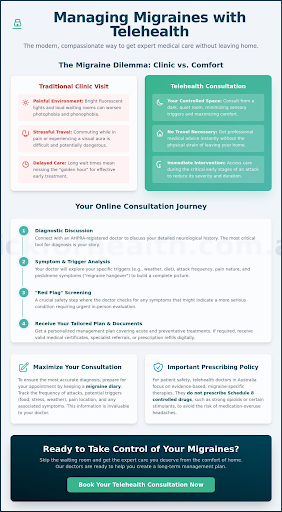
When a migraine strikes, your sensitivity to light and sound, known as photophobia and phonophobia, can make any movement feel agonizing. Traditional clinics are often filled with bright fluorescent lights, humming air conditioners, and the noise of a busy waiting room. These environments can actively worsen your pain. Choosing a migraine telehealth consultation allows you to stay in a controlled, dark, and quiet environment. You won't have to worry about the stress of driving while experiencing a visual aura or navigating public transport during a peak attack. This immediate access during the "golden hour" of symptom onset means you can start your management plan sooner, potentially reducing the duration and intensity of the episode.
The Clinical Validity of Remote Neurological History
You might wonder if a doctor can provide an accurate diagnosis without a physical exam. In the case of headaches, the most critical diagnostic tool is a detailed neurological history. AHPRA-registered practitioners are trained to use your verbal descriptions to differentiate between standard tension headaches and migraines. They'll ask about your triggers, the frequency of your attacks, and the specific nature of your pain. A vital part of this process is "red flag" screening, where the doctor checks for symptoms that might require urgent in-person care. These consultations also help establish a long-term digital health record. Having your history documented in one place makes it easier for doctors to track your progress, identify patterns, and provide the specialist referrals you might need for more complex cases.
What to Expect During Your Online Migraine Consultation
Many people feel anxious about their first migraine telehealth consultation, wondering if a screen can bridge the gap to quality care. The process is designed to be seamless and supportive. Once you book your appointment, you'll connect with a practitioner who focuses on your specific history. They won't just ask where it hurts; they'll look at the entire pattern of your attacks. This clinical rigor is backed by ongoing telehealth clinical trials that demonstrate how virtual care effectively manages chronic headache disorders.
During the call, your doctor will discuss various treatment pathways tailored to your needs. This usually involves "acute" treatments to stop an active attack and "preventative" options if your migraines are frequent. You should know that telehealth doctors in Australia do not prescribe Schedule 8 controlled substances, such as strong opioids or restricted stimulants. Instead, the focus remains on evidence-based, migraine-specific therapies that address the neurological root of the pain while minimizing the risk of medication-overuse headaches.
The Diagnostic Discussion: Triggers and Symptoms
Your doctor will dive deep into what sets off your episodes. In Australia, common triggers often include sudden weather shifts, like extreme heat or humidity, and specific dietary habits. You'll also discuss the "migraine hangover," or postdrome phase. This stage can leave you feeling drained or "foggy" for days after the intense pain subsides. Reviewing what has worked for you in the past helps the doctor refine your care. This ensures you don't waste time on treatments that haven't helped you before.
Developing a Personalized Migraine Action Plan
The ultimate goal is to reduce your total "headache days" each month. Your personalized plan might include lifestyle adjustments, like optimizing your home office ergonomics to reduce neck strain. This plan serves as a roadmap for your recovery. If you need a professional online consultation to get started, you can secure the necessary documentation for your employer or regular GP right away. This ensures everyone involved in your care is on the same page. Having a clear, written strategy helps you feel more in control when the next episode begins.
Comparing Telehealth Services for Headaches and Migraines
Choosing the right platform for your care is about more than just finding the fastest connection. While many Australian services offer quick prescription refills, a comprehensive migraine telehealth consultation provides a level of clinical oversight that a simple "script-only" service cannot match. High levels of patient satisfaction with migraine telehealth often come from the ability to have a real conversation with a practitioner who understands the nuances of chronic pain. This distinction is vital when your symptoms are changing or your current management plan isn't delivering the relief you deserve.
When to Choose a Consultation Over a Simple Script
A script-only request is often a transactional process, best suited for those with a long-standing diagnosis who simply need a refill of a known medication. However, if you're experiencing new symptoms, an increase in the frequency of your attacks, or a change in pain intensity, a full consultation is the safer choice. During a full appointment, your doctor can assess whether your current treatment is still appropriate or if it's time to try a different approach. This is also the point where a doctor can provide a specialist referral to a neurologist. In the Australian healthcare system, having a GP-led telehealth consultation is the standard pathway to accessing specialized neurological care for chronic or complex migraines.
The Value of Documentation: Certificates and Referrals
Professional telehealth services provide more than just medical advice; they offer the formal documentation required for modern life. If a migraine has left you unable to work, a valid medical certificate is essential for workplace compliance. These certificates must meet specific legal standards in Australia to be accepted by employers or educational institutions. Beyond sick leave, your doctor can also issue:
- Specialist Referrals: Necessary for seeing a neurologist under the Medicare system.
- Pathology Requests: Blood tests that help rule out secondary causes for your headaches, such as vitamin deficiencies or hormonal imbalances.
- Radiology Requests: Scans that may be required if your "red flag" screening suggests a need for deeper investigation.
This integrated approach ensures that your online care isn't an isolated event. By providing pathology or radiology requests, your telehealth practitioner acts as a partner in your long-term health journey. They help build a bridge between your immediate need for pain relief and the comprehensive diagnostic work required for lasting improvement. This ensures continuity of care, allowing your regular local GP to stay informed about your treatment through shared health records and formal documentation.
How to Prepare for a Successful Migraine Telehealth Appointment
Preparing for a professional medical visit is always easier when you're feeling well, but a migraine telehealth consultation often happens when you're at your most vulnerable. Taking a few small steps before the call can make the interaction much more effective for both you and your doctor. If you've been using a tracking app or a simple paper diary, have it ready. This data helps the clinician see the long-term pattern of your health rather than just a single snapshot of your current pain.
Optimizing Your Environment for the Call
Most people with migraines struggle with intense light sensitivity. You don't need to sit in a bright room just to be seen on camera. Switch your device to "dark mode" and lower the screen brightness to the minimum comfortable level. If you're using a phone or tablet, propping it up on a stable surface prevents the nausea that can come from a shaky handheld screen. Using headphones can help if sound sensitivity is an issue; it allows you to hear the doctor clearly without needing to turn up the volume on external speakers. Find a quiet, private space where you feel safe discussing your medical history without interruptions.
Information to Have at Your Fingertips
To get the most out of your appointment, gather your medical details beforehand. Your doctor will need to know the specifics of your history to provide the best care. Having these items ready will help:
- Failed Medications: A list of treatments you've tried in the past that either didn't work or caused unbearable side effects.
- Attack Frequency: Approximate dates of your last three attacks and how long they lasted.
- Test Results: Any recent blood test results or radiology reports you've received from other providers.
- Current Allergies: A clear list of any known drug allergies or sensitivities.
Communicating your pain levels through a screen requires specific language. Instead of just saying it hurts, describe the sensation. Is it a rhythmic throbbing, a sharp stabbing, or a dull pressure? Mention if you experience an aura, such as flashing lights or blind spots. This level of detail helps the clinician provide the most accurate advice and management plan. If you're ready to speak with a professional about your symptoms, you can book a general telehealth consultation today to begin your recovery journey. Being proactive about your preparation ensures that even in the middle of an attack, you receive the highest standard of care without the stress of travel.
Accessing Migraine Support with Click for Health
Click for Health is more than just a digital platform; we're your partner on the journey toward better health. When the world feels too loud and the light is unbearable, you need a supportive hand to guide you through the clinical process. We serve as your first point of contact for professional migraine relief, bridging the gap between your immediate pain and a sustainable management plan. Our service focuses on non-emergency Australian healthcare, providing a calm and safe space to discuss your symptoms without the sensory overload of a traditional clinic.
Our practitioners understand that every individual's experience with pain is unique. We take the time to listen to your history and concerns, ensuring you feel seen as a person rather than just a patient. This empathetic approach helps dissolve the uncertainty that often accompanies chronic conditions. By choosing a migraine telehealth consultation, you're opting for a modern, accessible way to manage your health that respects your physical boundaries and your time.
Our Streamlined Online Booking Process
We've designed our interface to be as functional and user-friendly as possible. We know that during an attack, even the simplest tasks can feel overwhelming. Our system allows you to secure an appointment with Australian-registered health practitioners with just a few clicks. Once your consultation concludes, we send eScripts and digital medical certificates directly to your smartphone. This immediate delivery ensures you have the documentation you need for work or the prescriptions required for relief without leaving your home. It's a seamless transition from booking to care.
Beyond the Consultation: Holistic Support
Finding lasting relief often requires a comprehensive look at your overall health. If your clinician identifies a need for further investigation, they can provide the following:
- Pathology Requests: To check for underlying deficiencies or hormonal triggers.
- Radiology Requests: For detailed imaging if your history suggests a need for deeper screening.
- Specialist Referrals: To connect you with neurologists for chronic migraine management.
- Weight Loss Consultations: To address metabolic triggers that may worsen your headache frequency.
This integrated approach ensures that all your health needs are met within a single, cohesive framework. If your symptoms require more specialized attention, we can issue a specialist referral to a neurologist. This ensures you remain within the Australian healthcare system's formal pathway for chronic care. We're committed to your long-term quality of life, moving beyond immediate fixes to help you build a proactive management strategy. Book your migraine telehealth consultation with Click for Health today and discover how accessible expert care can truly be.
Take Control of Your Migraine Management Today
Managing chronic pain requires a partner who understands the physical and emotional toll of every attack. By choosing a migraine telehealth consultation, you've learned how to bypass the sensory triggers of traditional clinics and access professional care from the safety of your home. You now have the tools to secure valid medical certificates, manage prescription refills, and establish a clear pathway toward specialist neurological support. This modern approach ensures that your recovery remains the top priority without the added burden of travel.
Our team of AHPRA-registered Australian practitioners is dedicated to providing secure digital delivery of eScripts and certificates directly to your device. We also offer after-hours bulk-billing for eligible patients, ensuring that expert medical advice is accessible when you need it most. You deserve a management plan that adapts to your life, not the other way around. Book Your Migraine Consultation Now and start your journey toward more headache-free days. We're here to support you every step of the way.
Frequently Asked Questions
Can a telehealth doctor prescribe migraine medication in Australia?
Yes, Australian-registered telehealth doctors can prescribe a wide range of migraine medications, including acute relief and preventative treatments. However, they cannot prescribe Schedule 8 controlled substances or restricted drugs. During your migraine telehealth consultation, the doctor will assess your history and symptoms to determine the most appropriate evidence-based medication for your specific needs, ensuring you receive professional care without leaving your home.
How do I get a medical certificate for a migraine online?
You can secure a medical certificate by booking an online consultation and discussing your symptoms with a practitioner. If the doctor determines that your migraine prevents you from working or studying, they'll issue a secure digital certificate. This document is usually sent directly to your phone or email immediately after the appointment, allowing you to notify your employer without the stress of traveling to a physical clinic.
Will an online doctor refer me to a neurologist for my migraines?
Yes, telehealth practitioners can provide formal specialist referrals to neurologists for patients requiring chronic management. If your migraines are frequent, severe, or not responding to standard treatments, a referral is the necessary next step within the Australian healthcare system. This ensures you can access specialized care and Medicare rebates for neurologist visits while maintaining a clear digital record of your medical journey.
What should I do if my migraine is an emergency?
If you experience a sudden, severe "thunderclap" headache or symptoms like speech difficulty and numbness, you must call 000 or visit an emergency department immediately. Telehealth services are not designed for emergency medical situations or life-threatening conditions. We focus on non-emergency clinical management and support. Always seek urgent in-person care if your symptoms are unusual, extreme, or accompanied by neurological deficits.
Can I get a triptan script refill through a telehealth appointment?
You can certainly request a triptan script refill during your appointment if you have a previous diagnosis and found the medication effective. Triptans are a standard acute treatment for migraines and are frequently managed through telehealth services. The doctor will review your usage and any side effects before issuing a new eScript, which can then be sent directly to your preferred pharmacy for easy collection.
How long does a migraine telehealth consultation usually take?
Most consultations take approximately 10 to 15 minutes, though this can vary based on the complexity of your medical history. This timeframe allows the doctor to conduct a thorough neurological history, screen for red flags, and develop a personalized management plan. It's a focused, efficient process designed to get you the help you need quickly, especially when you're dealing with light and sound sensitivity.
Are online medical certificates for migraines accepted by Australian employers?
Yes, medical certificates issued by AHPRA-registered telehealth practitioners are legally valid and widely accepted by Australian employers and educational institutions. These documents meet the standards set by the Medical Board of Australia and Fair Work requirements. Because they are delivered digitally, they provide a fast and reliable way to document your need for sick leave or carer's leave without the physical strain of a commute.
What happens if the telehealth doctor determines I need an in-person exam?
If a practitioner determines that your symptoms require a physical diagnostic examination, they'll provide clear guidance on the next steps. This might involve advising you to visit a local GP clinic or an imaging center for a scan. The doctor may also issue pathology or radiology requests to help facilitate these in-person investigations, ensuring that your transition from virtual to physical care is as smooth and coordinated as possible.