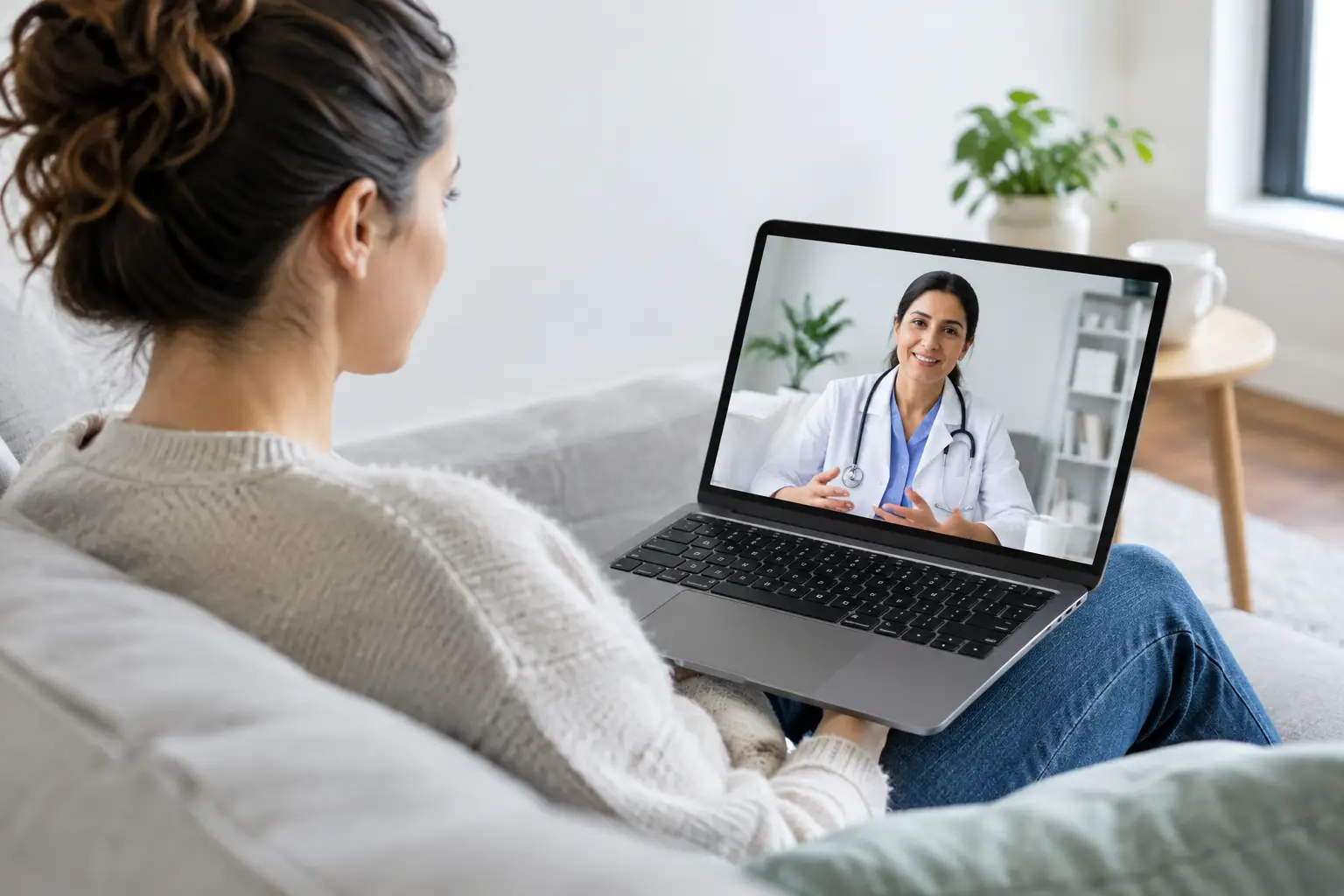
It is 11 pm, your child has developed a rash, a UTI is becoming painful, or you have realised you are out of a regular medicine. When you need to find overnight GP care, waiting until the next clinic opens may not feel like a practical option. For many non-emergency health concerns, an online consultation can help you speak with an Australian-registered doctor from home.
Overnight GP care is not a replacement for emergency treatment. It is a convenient way to access professional medical advice when your usual doctor is unavailable, travelling to a clinic is difficult, or you simply need care outside standard hours.
When you need to find overnight GP care
The right option depends on your symptoms. Telehealth can be useful for common, non-emergency concerns that can be assessed through a conversation, your medical history and, where appropriate, photos or information you provide during a secure consultation.
You may seek an overnight appointment for a new cold or flu-like illness, allergies, migraine, mild skin concerns, conjunctivitis symptoms, a suspected uncomplicated UTI, gastro symptoms, sexual health questions or contraception advice. It can also be helpful when you need a repeat prescription, medical certificate, pathology referral or specialist referral and your regular clinic has no appointments available.
For people managing an ongoing condition, overnight access can offer reassurance when a question cannot wait until morning. This might include advice about blood pressure, diabetes management, medication side effects or an existing treatment plan. The doctor will consider your situation and may recommend follow-up with your regular GP for continuity of care.
A consultation does not automatically mean a prescription, certificate or referral will be issued. These are clinical decisions made by the doctor after assessing your needs. In some cases, the safest next step may be an in-person examination, a pathology test, an urgent care clinic or your usual GP.
Know when telehealth is not the right choice
Online GP care is designed for non-emergency concerns. If symptoms are severe, rapidly worsening or potentially life-threatening, call Triple Zero (000) or go to the nearest emergency department. Do not wait for an online appointment.
Seek urgent emergency help for symptoms such as:
- chest pain, pressure or trouble breathing
- signs of stroke, including facial drooping, arm weakness or difficulty speaking
- severe allergic reaction, especially swelling of the face, tongue or throat
- heavy bleeding, a serious injury or loss of consciousness
- thoughts of harming yourself or someone else
Very young babies, severe dehydration, high fever with concerning symptoms, sudden severe pain and symptoms after a head injury may also need urgent in-person assessment. If you are unsure, err on the side of getting immediate help.
What an overnight online GP appointment can help with
An overnight telehealth consultation starts much like a visit to a clinic. You explain what is happening, how long symptoms have been present, what you have tried and whether you have any relevant medical conditions, allergies or medicines. The more accurate information you can provide, the better placed the doctor is to advise you.
For a straightforward issue, the doctor may provide self-care advice, discuss treatment options or, where clinically appropriate, issue an electronic prescription. They may also provide a medical certificate if your condition and circumstances support it. Scripts and certificates are not guaranteed, but telehealth can remove the need to leave home just to discuss a routine concern.
If you need a repeat script, have the medicine name, dose and details of your current treatment ready. It is also helpful to mention the pharmacy you usually use and whether you have had any recent changes in symptoms or side effects. Some medicines require an in-person review, additional monitoring or cannot be prescribed through telehealth. A registered doctor will explain what is appropriate.
For referrals, the doctor may assess whether a specialist, pathology test or another health professional is suitable. This can be particularly useful when you want to begin the next step in your care without waiting days for a standard appointment.
How to prepare for a useful consultation
No fuss does not mean no preparation. Taking a few minutes before your appointment can make the conversation clearer and more efficient.
Start by writing down your main concern in one sentence. For example: “I have had burning when urinating for two days and it is getting worse,” or “I need advice about a migraine that has not improved with my usual treatment.” Then note when the issue began, what makes it better or worse, and any symptoms that concern you.
Keep your current medication list nearby, including over-the-counter medicines, supplements and allergies. If the consultation is about a skin issue, take clear photos in good light before the appointment. If it is about a child, have their age, weight, temperature and any medicines already given available.
Choose a private, well-lit place with a reliable internet connection. You may be discussing personal health information, so headphones can be useful if other people are nearby. A secure telehealth service should protect your personal information and connect you with properly registered clinicians.
Choosing a safe overnight GP service
Convenience matters at night, but it should not come at the expense of clinical standards. Look for a service that clearly states its doctors are registered with the Australian Health Practitioner Regulation Agency, known as AHPRA. This helps confirm that you are speaking with a qualified doctor authorised to practise in Australia.
It is also sensible to check that pricing is shown upfront, the booking process is clear and the platform explains how it handles privacy and health information. You should know whether the consultation is bulk billed or privately billed before you book, and what to expect if the doctor decides you need in-person care.
Availability is another consideration. A service described as 24/7 should make it clear whether you can book at any time, how soon appointments are generally available and how you will receive any documentation issued after the consultation. Overnight care is most helpful when the process is simple: book, speak with a doctor, and receive appropriate next steps.
What happens after the appointment
The consultation may resolve the immediate issue, but good care sometimes requires a follow-up. If the doctor advises you to see your usual GP, organise tests or attend an in-person service, try to do so within the recommended timeframe. Keep any notes, certificates, prescriptions or referral details in a safe place.
Monitor your symptoms after the appointment. If they worsen, new red flags appear, or treatment is not helping as expected, seek further medical advice. A telehealth doctor can guide many common concerns, but an in-person examination remains the better option when physical assessment is needed.
For routine overnight needs, Click For Health makes it simple to book a secure online consultation with an Australian-registered doctor. Whether you are at home after a long shift, caring for a sick child or unable to get to a clinic, professional advice can be available when it suits your schedule.
Health concerns do not keep business hours. Knowing where to turn for safe, non-emergency overnight care means you can make a calm decision, get appropriate advice and take the next step with confidence.